

Hypopigmentation is a condition in which areas of the skin become lighter than the surrounding skin due to a reduction or absence of melanin, the pigment responsible for skin colour. It can affect people of all ages and skin types and may occur anywhere on the body.
There are several causes of hypopigmentation. Common causes include skin injuries, burns, infections, inflammatory skin conditions, certain medications and genetic disorders. Conditions such as vitiligo and pityriasis alba can also produce lighter patches on the skin. In some cases, hypopigmentation develops after inflammation or trauma as the skin heals.
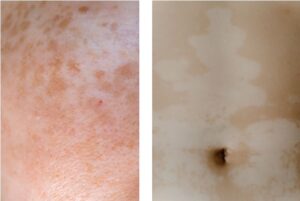
The appearance of hypopigmentation varies depending on its cause. It may present as small, pale patches or larger areas of noticeably lighter skin. Some forms are temporary and may gradually improve, while others can be long-lasting or permanent.
Treatment depends on the underlying cause. Options may include treating an infection or inflammation, using prescribed topical medications, phototherapy, or other dermatological treatments. In some cases, no specific treatment is required, and the pigmentation may return naturally over time. Protecting affected areas from excessive sun exposure and using sunscreen can help reduce contrast between affected and unaffected skin and protect the skin from sun damage.
Anyone with new, spreading, or persistent areas of hypopigmentation should consult a healthcare professional or dermatologist for an accurate diagnosis and appropriate management.
If you have any concerns you may wish us to check your skin – SkinCheck Australia.