

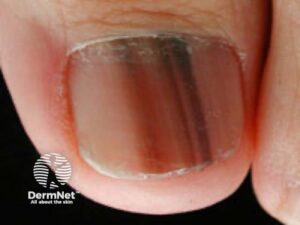
When people think about skin cancer, they often picture suspicious moles on sun-exposed areas such as the face, arms, or back. However, skin cancer can also develop in less obvious places—including underneath the fingernails and toenails.
Although relatively uncommon, nail unit melanoma is a serious form of skin cancer that can be easily overlooked or mistaken for a bruise, fungal infection, or nail injury. Early detection is critical, as delayed diagnosis can lead to more advanced disease and poorer outcomes.
What Is Nail Melanoma?
Nail melanoma, also known as subungual melanoma, is a type of melanoma that develops in the nail matrix—the area beneath the nail where nail growth begins. Unlike many other forms of melanoma, nail melanoma is not always related to sun exposure.
This cancer can affect both fingernails and toenails and may occur in people of all skin types. However, it is more commonly diagnosed in adults over the age of 50 and is seen more frequently in individuals with darker skin tones.
Warning Signs to Watch For
One of the most common early signs of nail melanoma is a dark vertical stripe running from the cuticle to the tip of the nail. While not every dark stripe is cancerous, certain features should raise concern.
Signs that warrant medical evaluation include:
- A dark brown, black, or irregularly coloured band in the nail
- A stripe that becomes wider over time
- Pigment extending onto the surrounding skin (known as Hutchinson’s sign)
- Nail splitting, cracking, or distortion
- Persistent nail damage without a known cause
- A nail that lifts from the nail bed
- Bleeding, ulceration, or pain around the nail
In some cases, melanoma may not produce any dark pigment at all, making diagnosis even more challenging.
Toenails vs Fingernails
Nail melanoma can occur in either the fingers or toes, but certain digits appear to be affected more often than others. The thumb and the big toe are among the most commonly involved.
Because toenails frequently experience trauma from footwear, exercise and daily activities, melanoma under a toenail is often mistaken for a bruise caused by injury. If a dark mark does not grow out with the nail over several months, it should be assessed by a healthcare professional.
Other Skin Cancers That Can Affect the Nail Area
While melanoma is the most concerning form of nail-related skin cancer, other skin cancers can also develop around the nail unit.
Squamous Cell Carcinoma (SCC)
Squamous cell carcinoma is the most common cancer affecting the nail unit. It may appear as:
- A persistent wart-like growth
- Chronic nail infection that does not respond to treatment
- Nail destruction or thickening
- Painful swelling around the nail
Because SCC often resembles common nail conditions, diagnosis may be delayed.
Basal Cell Carcinoma (BCC)
Basal cell carcinoma rarely affects the nail area but can occur around the surrounding skin. It may present as:
- A slow-growing lump
- A persistent sore that does not heal
- A shiny or pearly lesion near the nail
When Should You Seek Medical Advice?
Any unexplained change in the appearance of a fingernail or toenail that persists for more than a few weeks should be evaluated by a healthcare professional.
Particular attention should be given to:
- New dark streaks appearing in adulthood
- Pigmented bands that are changing in size or colour
- Nail abnormalities affecting only one digit
- Symptoms that fail to improve despite treatment
A dermatologist or skin cancer specialist may perform a nail examination and, if necessary, a biopsy to determine whether cancer cells are present.
Diagnosis and Treatment
Diagnosis typically involves a detailed clinical examination, dermoscopy, and biopsy of the affected nail area.
Treatment depends on the type and stage of cancer but may include:
- Surgical removal of the tumour
- Mohs micrographic surgery for selected cases
- Sentinel lymph node assessment for melanoma
- Additional therapies such as immunotherapy, targeted therapy, or radiation treatment when appropriate
Early-stage cancers generally have significantly better outcomes than those diagnosed after spreading beyond the nail unit.
Can Nail Cancer Be Prevented?
While not all nail cancers can be prevented, several measures may help reduce risk:
- Perform regular self-examinations of fingernails and toenails
- Protect hands and feet from repeated trauma when possible
- Use sunscreen on exposed skin around the nails
- Avoid excessive UV exposure, including tanning beds
- Seek professional assessment for any persistent nail changes
Final Thoughts
Skin cancer under the nails is rare but potentially life-threatening. Because it often resembles harmless conditions such as bruises, fungal infections, or nail trauma, it can easily go unnoticed.
Paying attention to persistent changes in your fingernails and toenails—and seeking prompt medical evaluation when something looks unusual—can make a significant difference. Early detection remains the most important factor in improving treatment success and long-term outcomes.
If you notice a dark streak, unexplained nail damage, or any change that doesn’t resolve over time, don’t ignore it. Your nails may be revealing more than you think.
For information about our skin checks and for booking information please click here.